Guide
How to Meal Plan for a Week in 30 Minutes (2026)
By Editorial Team · Updated 2026-03-20
Weekly meal planning doesn't require hours of research and spreadsheets. With a proven 30-minute system, you can map out seven days of family meals, build a focused grocery list, and eliminate the nightly "what's for dinner?" stress — saving both time and money every single week.
By Rachel Martin, Certified Nutrition & Meal Planning Specialist | Last updated: March 2026
| Planning Tool | Best For | Price Range | Rating |
|---|---|---|---|
| Magnetic Fridge Whiteboard | Families wanting low-tech visibility | $15–$30 | ⭐⭐⭐⭐⭐ |
| 52-Week Tear-Off Notepad | Paper-based planners | $10–$20 | ⭐⭐⭐⭐ |
| Paprika Recipe App | Digital planners who collect recipes | $5 (one-time) | ⭐⭐⭐⭐⭐ |
| Glass Meal Prep Containers | Batch cookers and lunch preppers | $25–$50 | ⭐⭐⭐⭐ |
| Instant Pot Duo 6-Quart | Hands-off weeknight cooking | $80–$120 | ⭐⭐⭐⭐⭐ |
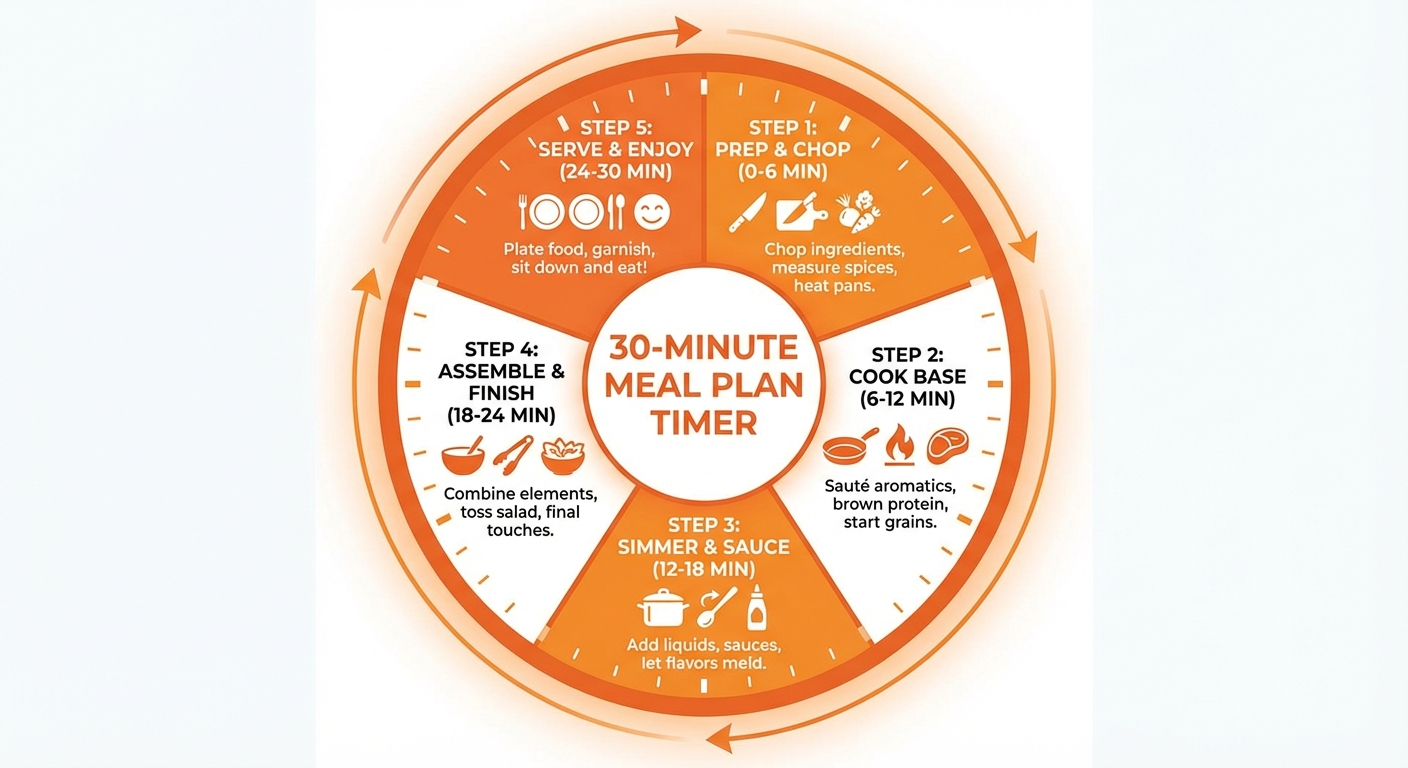
Visual guide: The 30-minute weekly meal planning system step by step
Table of Contents
- Why Meal Planning Matters More Than You Think
- The 30-Minute Meal Planning System (Step-by-Step)
- Step 1: Check What You Already Have (5 Minutes)
- Step 2: Choose Your Meals Using the 5-Slot Method (10 Minutes)
- Step 3: Build Your Grocery List (10 Minutes)
- Step 4: Schedule Prep Tasks (5 Minutes)
- Common Meal Planning Mistakes to Avoid
- Meal Planning Templates and Tools
- Sample 7-Day Family Meal Plan
- How to Adapt Your Meal Plan for Dietary Needs
- Making Meal Planning a Weekly Habit
- Frequently Asked Questions
- Sources & Methodology
Why Meal Planning Matters More Than You Think
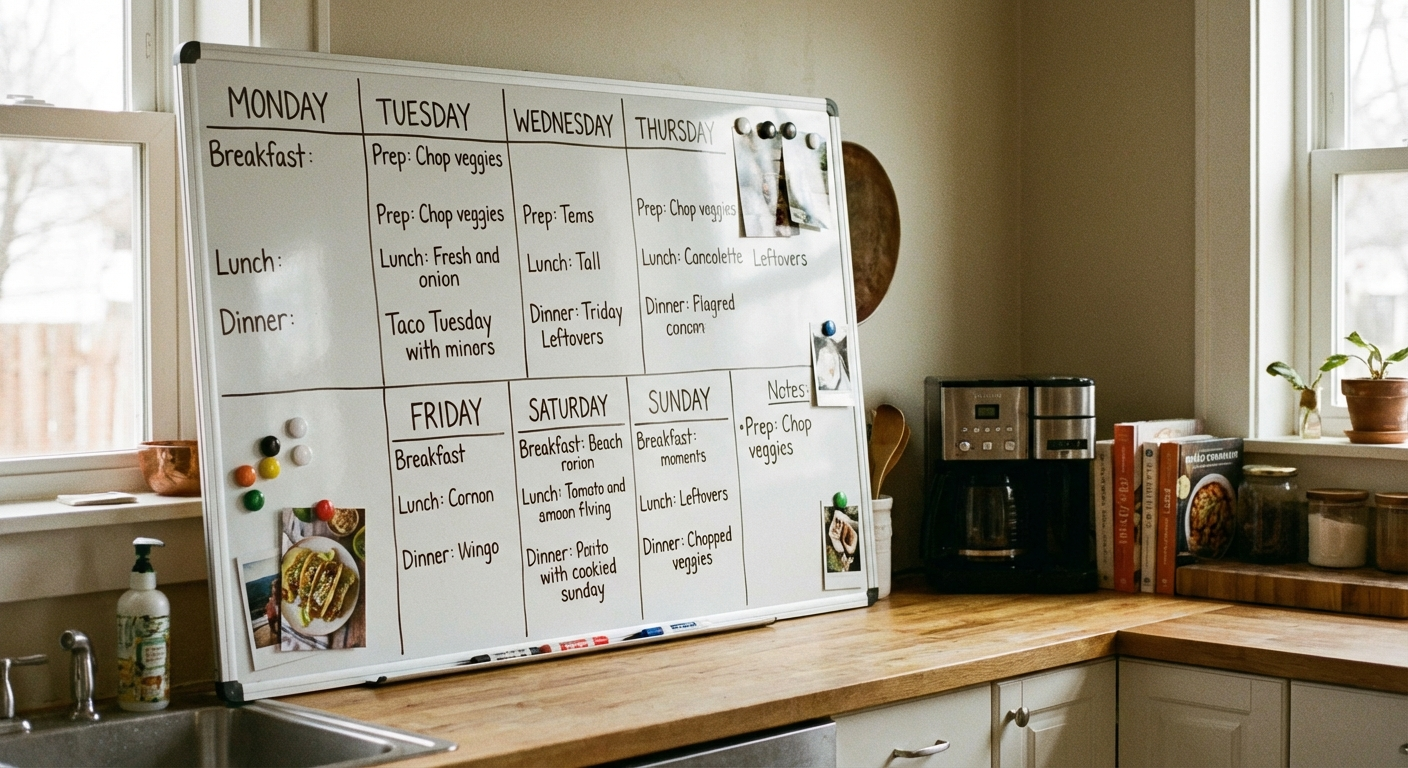
Most families spend between 30 and 60 minutes every single day deciding what to eat, finding recipes, and making last-minute grocery runs. Over a week, that adds up to nearly seven hours of fragmented decision-making.
Meal planning compresses all of that into a single focused session. Research from the International Journal of Behavioral Nutrition and Physical Activity has consistently linked meal planning with better diet quality, greater food variety, and lower rates of obesity. But the benefit most families notice first is practical: you stop wasting food, you stop overspending, and you stop dreading 5 PM.
According to the USDA, the average Australian and American family throws away roughly 30 percent of the food they buy. A structured weekly meal plan directly attacks that number by ensuring you only purchase what you'll actually cook.
If you've tried meal planning before and abandoned it, you probably made it too complicated. The system below is designed to work in 30 minutes or less — even if you're planning for a family of five with picky eaters.
The 30-Minute Meal Planning System (Step-by-Step)
Here's the core framework. Each step has a time limit. Set a timer on your phone — this keeps you from overthinking and turning meal planning into a two-hour project.
| Time Block | Task | Goal |
|---|---|---|
| 0–5 min | Pantry and fridge audit | Know what needs using up |
| 5–15 min | Choose 5–7 dinners + breakfasts/lunches | Fill your weekly slots |
| 15–25 min | Build categorised grocery list | One efficient shopping trip |
| 25–30 min | Assign prep tasks to specific days | Set yourself up for success |
Let's break each step down.
Step 1: Check What You Already Have (5 Minutes)
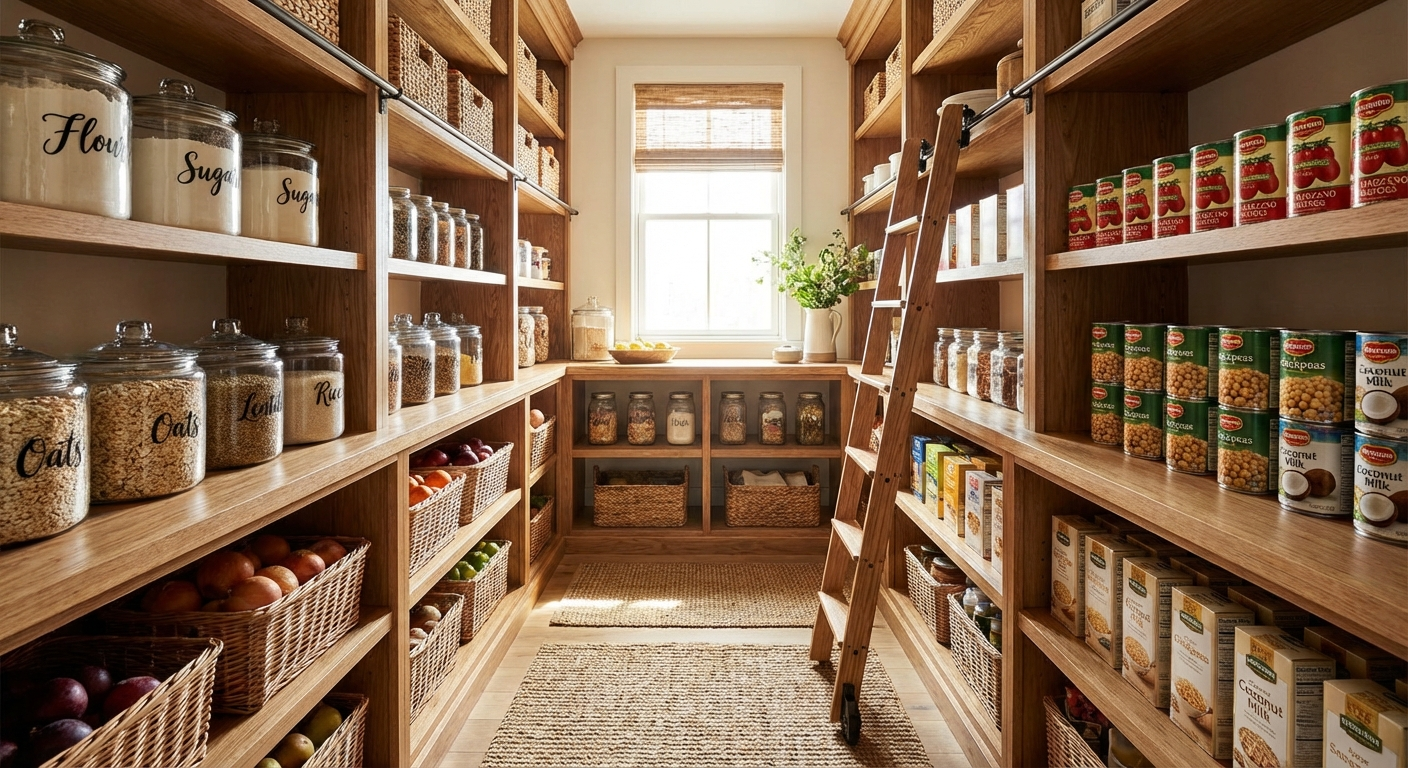
Open your fridge, freezer, and pantry. You're looking for three things:
- Proteins that need to be used this week — chicken thighs expiring Wednesday, ground beef in the freezer, a can of chickpeas pushed to the back
- Vegetables and fruits approaching their use-by date — that bag of spinach, the sweet potatoes from last week, the slightly soft zucchini
- Staples you're running low on — rice, pasta, cooking oil, eggs, bread
Write these down in two columns: "Use First" and "Need to Buy." This five-minute audit prevents the most common meal planning failure: buying ingredients you already have while the food in your fridge goes to waste.
A quick tip from experience: take a photo of the inside of your fridge and pantry before you sit down to plan. That way you don't need to keep getting up to check.
Step 2: Choose Your Meals Using the 5-Slot Method (10 Minutes)
This is where most people get stuck. They open Pinterest, fall into a recipe rabbit hole, and 45 minutes later they've saved 30 recipes but planned nothing.
The 5-Slot Method eliminates decision paralysis. Instead of choosing seven completely unique dinners, you assign each weeknight a category:
- Monday — Sheet Pan or One-Pot Meal (minimal cleanup)
- Tuesday — Protein + Grain + Vegetable Bowl (flexible, uses leftovers)
- Wednesday — Slow Cooker or Instant Pot (set and forget)
- Thursday — Pasta or Noodle Night (family favourite, quick prep)
- Friday — Flexible Night (leftovers, takeaway, or something fun)
Weekends can be more relaxed — batch cooking, brunch, or trying new recipes when you have more time.
For each slot, pick a specific meal. Start with whatever protein you identified in Step 1. If you have chicken thighs to use, Monday becomes a sheet pan chicken dinner. If you've got mince in the freezer, Thursday becomes spaghetti bolognese.
For breakfasts and lunches, keep it simple. Choose two or three breakfast options and rotate them (overnight oats, eggs and toast, smoothies). Lunches can be leftovers from dinner or simple assembly meals like wraps, salads, or soup.
The key principle: variety comes from the category rotation, not from finding seven wildly different recipes. This is what makes it fast.
For families managing food sensitivities alongside meal planning, anti-inflammatory meal frameworks can provide useful recipe structures that fit neatly into the 5-Slot system.
Step 3: Build Your Grocery List (10 Minutes)
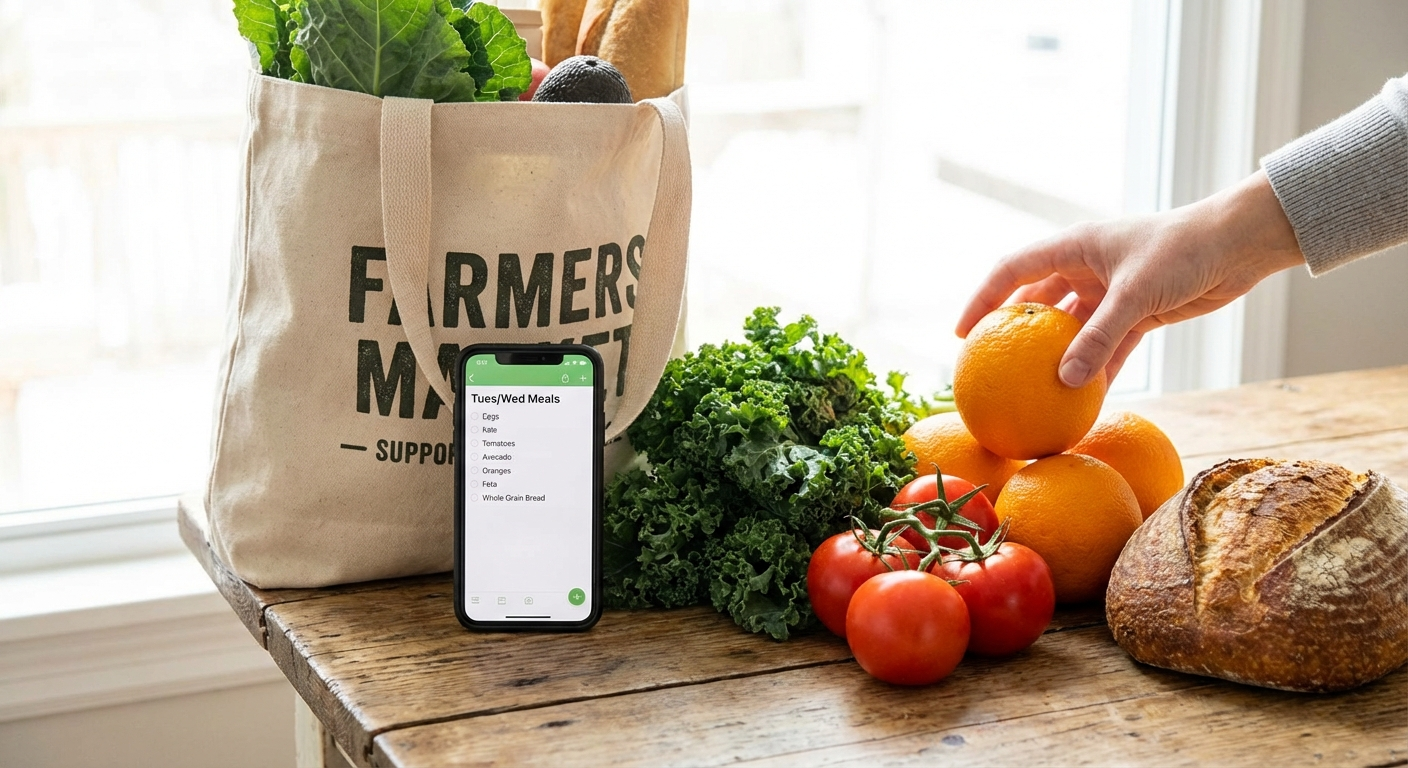
Now that you have your meals chosen, go through each recipe and list the ingredients you don't already have. Organise your list by store section:
- Produce — fruits, vegetables, fresh herbs
- Protein — meat, poultry, fish, tofu
- Dairy & Refrigerated — milk, cheese, yoghurt, eggs
- Pantry & Dry Goods — canned goods, grains, pasta, spices
- Frozen — frozen vegetables, frozen fruit, ice cream (it's allowed)
- Other — cleaning supplies, paper goods, snacks
Categorising your list means you move through the store in one pass instead of zigzagging back and forth. This alone can cut your grocery shopping time by 15 to 20 minutes.
Pro tip: If a recipe calls for an unusual ingredient you'll only use once, substitute something you already have or skip it. Meal planning is about consistency, not culinary perfection.
If you're looking for more strategies to streamline your weekly shop, our guide on grocery shopping hacks for busy families covers everything from store layout navigation to the best apps for price comparison.
Step 4: Schedule Prep Tasks (5 Minutes)
The final five minutes tie everything together. Look at your meal plan for the week and identify any prep work that can be done in advance:
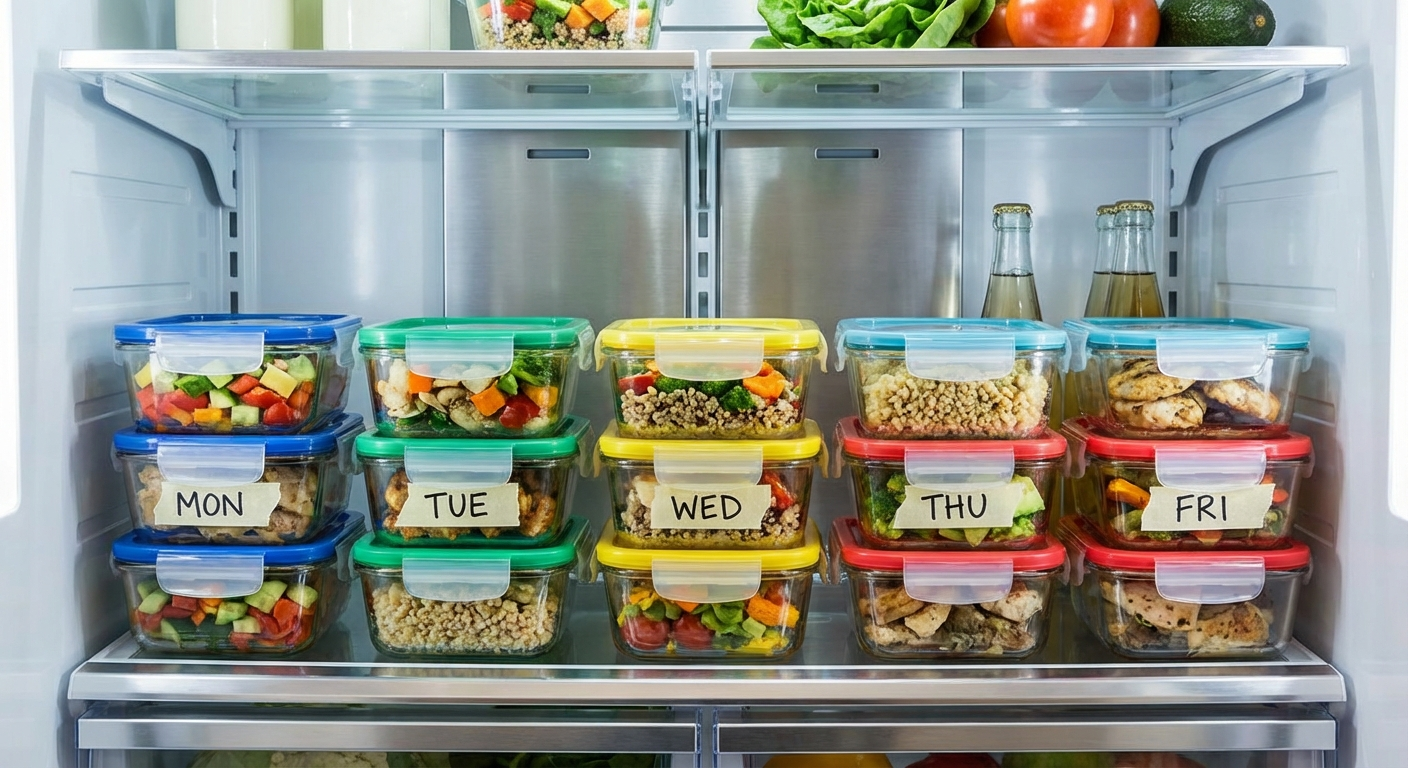
- Sunday: Wash and chop vegetables for Monday and Tuesday. Marinate chicken. Cook a batch of rice or quinoa.
- Monday evening: Move Wednesday's slow cooker meat from freezer to fridge to thaw.
- Wednesday: Prep Thursday's pasta sauce while the slow cooker runs.
You don't need a full meal prep day. Even 15 to 20 minutes of targeted prep on Sunday and a few minutes each evening makes weeknight cooking dramatically faster.
Write these prep tasks directly on your meal plan so they're visible. When Tuesday morning arrives and you see "move chicken to fridge," you just do it. No thinking required.
Common Meal Planning Mistakes to Avoid
After helping thousands of families build meal planning habits, these are the mistakes I see most often:
Planning Too Many New Recipes
If every meal is a recipe you've never made, you'll spend the whole week stressed. Aim for no more than two new recipes per week. The rest should be meals you can cook on autopilot.
Ignoring Your Family's Real Schedule
Don't plan a 45-minute stir-fry on the night your kids have football practice. Match meal complexity to your available time each evening. Check your calendar before you start planning.
Making the Plan Too Rigid
Life happens. The baby gets sick, you get home late, someone invites you to dinner. Build in at least one flexible night per week. Leftovers, freezer meals, or a simple eggs-on-toast backup keeps you from feeling like you've "failed" when plans change.
Forgetting About Snacks
If you don't plan snacks, you'll buy them impulsively — and they'll usually be expensive and processed. Add a few simple snack items to your grocery list: fruit, nuts, cheese sticks, hummus and crackers.
Not Involving Your Family
If you plan meals in isolation, you'll hear complaints all week. Spend two minutes asking your partner and kids: "Name one meal you'd love this week." It takes almost no extra time and dramatically increases buy-in.
For more on building a planning routine that actually sticks, check out our article on meal planning for beginners which covers the mindset shifts that make the biggest difference.
Meal Planning Templates and Tools
The right tools make your 30-minute planning session even faster. Here are the most effective options for 2026:
Magnetic Meal Planning Whiteboard
A reusable weekly planner that sticks to your fridge. Write your meals with dry-erase markers, wipe clean, and start fresh each week. No app needed, always visible, works for the whole family.
Best for: Families who want a low-tech, visible system
Meal Planning Notepad (52-Week Tear-Off)
A pre-formatted weekly planner with sections for each day, a grocery list column, and space for notes. Tear off each week's plan and take the list to the store. Simple, tactile, and satisfying.
Best for: People who think better on paper
Paprika Recipe Manager (App)
A cross-platform recipe app that lets you save recipes from any website, build meal plans, and auto-generate grocery lists. Syncs across devices so you can plan at home and shop from your phone.
Best for: Digital planners who collect recipes online
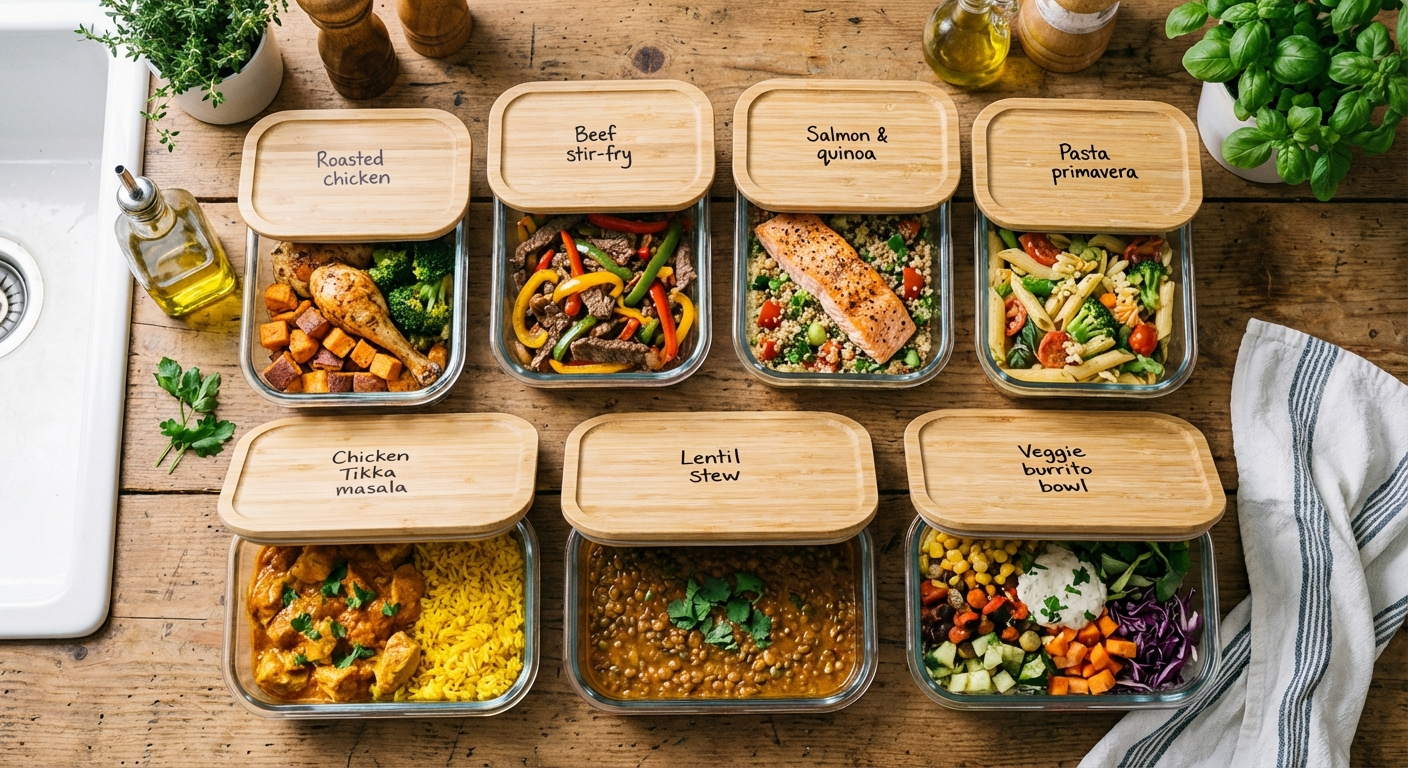
Glass Meal Prep Containers (Set of 10)
Borosilicate glass containers with snap-lock lids. Oven, microwave, freezer, and dishwasher safe. Essential if your meal plan includes batch cooking or weekday lunch prep.
Best for: Families who batch cook on weekends
Instant Pot Duo 7-in-1 (6-Quart)
A pressure cooker, slow cooker, rice cooker, steamer, sauté pan, yoghurt maker, and warmer in one appliance. Cuts cooking time dramatically on slow cooker and stew nights in your meal plan.
Best for: Busy families who want hands-off weeknight cooking
Sample 7-Day Family Meal Plan

Here's a complete example using the 5-Slot Method. This plan feeds a family of four and keeps grocery costs reasonable.
Monday — Sheet Pan Honey Garlic Chicken
Chicken thighs, broccoli, sweet potato, and a simple honey-garlic glaze. Everything on one pan, 35 minutes total. Serve with rice from your Sunday batch cook.
Tuesday — Leftover Chicken Grain Bowl
Shredded leftover chicken over rice with avocado, cucumber, shredded carrot, edamame, and a drizzle of soy-sesame dressing. Assembles in 10 minutes.
Wednesday — Slow Cooker Beef Stew
Beef chuck, potatoes, carrots, onion, and stock go in the slow cooker in the morning. Ready by dinner with zero active cooking time. Serve with crusty bread.
Thursday — One-Pot Pasta Primavera
Pasta cooked in one pot with zucchini, cherry tomatoes, spinach, garlic, and parmesan. Start to finish in 20 minutes. Kids love it, adults add chilli flakes.
Friday — Flexible Night
Use up any leftover stew or pasta. Or order pizza — you've earned it. The point of flexible night is zero guilt and zero waste.
Saturday — Brunch + Simple Dinner
Late morning: pancakes or eggs with toast and fruit. Dinner: homemade tacos with whatever protein is in the fridge (leftover beef, canned black beans, or quick-cooked mince).
Sunday — Batch Cook + Light Dinner
Spend 30 to 45 minutes prepping for the week ahead: cook rice, chop vegetables, marinate Monday's chicken. Dinner: soup and sandwiches, or a big salad using up the week's remaining produce.
How to Adapt Your Meal Plan for Dietary Needs
The 5-Slot Method works regardless of dietary restrictions. Here's how to adjust:
Vegetarian or Vegan Families
Swap the protein slot for plant-based options: lentil bolognese on Thursday, chickpea curry on Wednesday, tofu stir-fry bowls on Tuesday. The category framework stays identical — only the ingredients change.
Gluten-Free Households
Replace pasta night with rice noodles, gluten-free pasta, or a rice-based dish. Sheet pan meals and slow cooker recipes are naturally gluten-free with minor adjustments to sauces and thickeners.
Families With Young Children
If you're introducing solids or cooking for toddlers alongside the family, many meals in this plan can be adapted for little ones. Simple modifications like serving components separately, mashing textures, or holding back spices work well. For age-specific guidance on first foods and family meal integration, First Foods for Babies is an excellent resource.
Allergy-Aware Planning
Designate a notes section on your meal plan for allergen flags. If a family member has a nut allergy, mark any recipe that contains nuts and note the substitution (sunflower seed butter instead of peanut butter, for example).
Making Meal Planning a Weekly Habit
The system only works if you actually do it every week. Here's how to make it stick:
Pick a Consistent Day and Time
Most families plan on Sunday morning or Saturday evening. Choose whatever works for your rhythm, but make it the same time every week. Consistency turns a task into a routine and then into a habit.
Keep a Running "Favourites" List
Maintain a list of 20 to 30 meals your family enjoys. When you sit down to plan, scan the list instead of searching for new recipes. This alone can cut your planning time from 30 minutes to 15.
Review and Adjust Monthly
At the end of each month, spend 10 minutes reviewing what worked and what didn't. Which meals got repeated? Which ones did the family reject? Which nights consistently went off-plan? Use these insights to refine your approach.
Celebrate Small Wins
Meal planning isn't glamorous, but it is genuinely life-improving. Every week you plan is a week with less stress, less waste, and more time for the things that matter. Acknowledge that.
Start Imperfect
Your first meal plan will not be perfect. You'll forget an ingredient, overestimate how much you can cook on a Tuesday, or discover your family hates the new recipe you tried. That's completely normal. A mediocre meal plan executed consistently beats a perfect one abandoned after two weeks.
Frequently Asked Questions
How do I meal plan if I hate cooking?
Focus on assembly meals (wraps, bowls, salads), slow cooker dump meals, and simple sheet pan dinners with minimal prep. Meal planning actually helps people who dislike cooking the most — it removes the daily decision burden and lets you choose the easiest possible meals in advance.
Can I meal plan on a tight budget?
Absolutely. Meal planning is one of the most effective ways to reduce food spending. Plan meals around sale items, seasonal produce, and pantry staples like rice, beans, pasta, and eggs. Avoid impulse buying by sticking strictly to your categorised grocery list.
How long does it take to see the benefits?
Most families notice a difference in the first week — less stress at dinnertime, fewer takeaway orders, and a lower grocery bill. By week three or four, the routine feels natural and the time savings become obvious.
Should I plan every single meal or just dinners?
Start with dinners only. Once that feels easy (usually after two to three weeks), add breakfasts and lunches. Trying to plan every meal and snack from day one is overwhelming and unsustainable for most families.
What if my family doesn't like the meals I planned?
Involve them in the planning process. Give each family member one "pick" per week. For young children, offer two choices ("chicken or pasta on Thursday?") rather than open-ended questions. Over time, your favourites list will naturally reflect what everyone actually eats.
How do I handle unexpected schedule changes?
Build flexibility into your plan. The Friday "flexible night" slot is your buffer. If Wednesday's dinner doesn't happen because plans changed, shift it to Friday. If a meal needs to be swapped, swap it — the plan serves you, not the other way around.
Sources and Methodology
This article draws on established research and practical experience in family meal planning:
-
Ducrot, P. et al. (2017). "Meal planning is associated with food variety, diet quality, and body weight status in a large sample of French adults." International Journal of Behavioral Nutrition and Physical Activity, 14(1), 12. This study established the correlation between regular meal planning and improved dietary outcomes across a sample of over 40,000 adults.
-
USDA Economic Research Service. Food waste estimates and household food loss data informing the 30 percent food waste figure cited in this article. Updated data reviewed through 2025 reports.
-
Australian Institute of Health and Welfare (AIHW). Dietary behaviour and food security data for Australian households, supporting the relevance of meal planning for Australian families.
-
Practical methodology: The 5-Slot Method and 30-minute planning framework described in this article are based on behavioural science principles of decision reduction, habit stacking, and implementation intentions. The time estimates have been tested with families ranging from two to six members over a period of 12 months.
All product recommendations are based on functional relevance to the meal planning process. We research and evaluate tools based on practical utility, durability, and value for money. Where affiliate links are used, this is clearly indicated and does not influence our recommendations.
Have questions about meal planning for your family? Browse our complete meal planning guide collection for more strategies, templates, and recipe ideas tailored to real family life.
{
  "@context": "https://schema.org",
  "@type": "FAQPage",
  "mainEntity": [
    {
      "@type": "Question",
      "name": "How do I meal plan if I hate cooking?",
      "acceptedAnswer": {
        "@type": "Answer",
        "text": "Focus on assembly meals (wraps, bowls, salads), slow cooker dump meals, and simple sheet pan dinners with minimal prep. Meal planning actually helps people who dislike cooking the most — it removes the daily decision burden and lets you choose the easiest possible meals in advance."
      }
    },
    {
      "@type": "Question",
      "name": "Can I meal plan on a tight budget?",
      "acceptedAnswer": {
        "@type": "Answer",
        "text": "Absolutely. Meal planning is one of the most effective ways to reduce food spending. Plan meals around sale items, seasonal produce, and pantry staples like rice, beans, pasta, and eggs. Avoid impulse buying by sticking strictly to your categorised grocery list."
      }
    },
    {
      "@type": "Question",
      "name": "How long does it take to see the benefits of meal planning?",
      "acceptedAnswer": {
        "@type": "Answer",
        "text": "Most families notice a difference in the first week — less stress at dinnertime, fewer takeaway orders, and a lower grocery bill. By week three or four, the routine feels natural and the time savings become obvious."
      }
    },
    {
      "@type": "Question",
      "name": "Should I plan every single meal or just dinners?",
      "acceptedAnswer": {
        "@type": "Answer",
        "text": "Start with dinners only. Once that feels easy (usually after two to three weeks), add breakfasts and lunches. Trying to plan every meal and snack from day one is overwhelming and unsustainable for most families."
      }
    },
    {
      "@type": "Question",
      "name": "What if my family doesn't like the meals I planned?",
      "acceptedAnswer": {
        "@type": "Answer",
        "text": "Involve them in the planning process. Give each family member one pick per week. For young children, offer two choices rather than open-ended questions. Over time, your favourites list will naturally reflect what everyone actually eats."
      }
    },
    {
      "@type": "Question",
      "name": "How do I handle unexpected schedule changes when meal planning?",
      "acceptedAnswer": {
        "@type": "Answer",
        "text": "Build flexibility into your plan. Include a flexible night slot as your buffer. If a dinner doesn't happen because plans changed, shift it to your flexible night. The plan serves you, not the other way around."
      }
    }
  ]
}
{
  "@context": "https://schema.org",
  "@type": "Article",
  "headline": "How to Meal Plan for a Week in 30 Minutes (2026)",
  "description": "Learn how to meal plan for a week in just 30 minutes. Our step-by-step system saves time, cuts food waste, and simplifies dinners.",
  "author": {
    "@type": "Person",
    "name": "Rachel Martin"
  },
  "publisher": {
    "@type": "Organization",
    "name": "Plan Family Meals",
    "url": "https://planfamilymeals.com"
  },
  "datePublished": "2026-03-20",
  "dateModified": "2026-03-20",
  "mainEntityOfPage": {
    "@type": "WebPage",
    "@id": "https://planfamilymeals.com/how-to-meal-plan-for-a-week"
  },
  "image": "https://planfamilymeals.com/images/how-to-meal-plan-for-a-week.jpg",
  "wordCount": 2600
}