Guide
Batch Cooking for Families: Beginner's Guide (2026)
By Editorial Team · Updated 2026-03-10
Batch cooking is the practice of preparing large quantities of food in a single session — typically 2 to 3 hours on a weekend — so your family has ready-to-eat or easy-to-assemble meals for the entire week. Families who batch cook save an average of 10 hours per week on meal preparation, reduce grocery spending by 20 to 30 per cent, and eat significantly fewer takeaway meals.
By Sarah Kim, Registered Dietitian & Meal Planning Expert · Published March 23, 2026
This article contains affiliate links. If you purchase through our links, we may earn a small commission at no extra cost to you. See our affiliate disclosure for details.
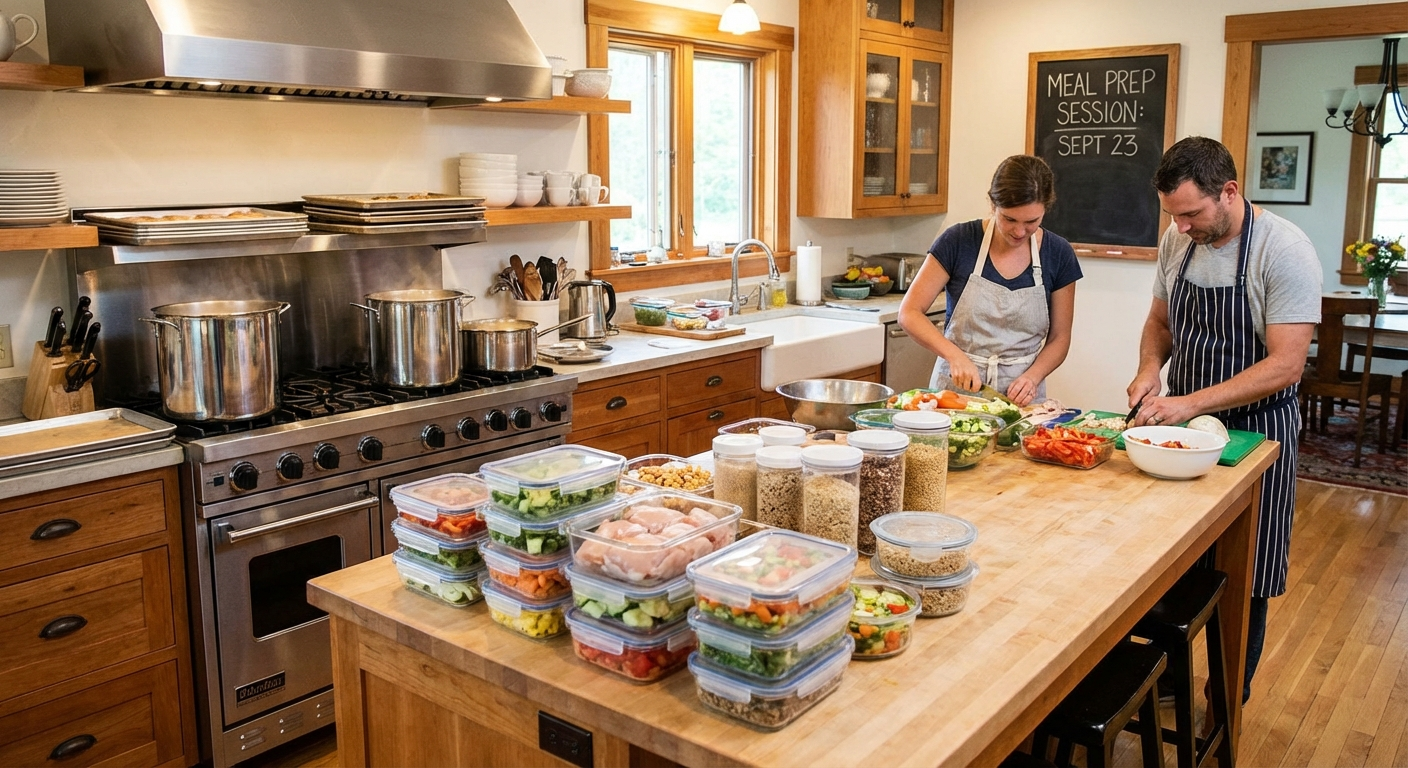
Table of Contents
- What Is Batch Cooking and Why It Works for Families
- Getting Started: Your First Batch Cooking Session
- Essential Batch Cooking Equipment
- The 5-Component Batch Cooking Framework
- Batch Cooking Recipes for Families
- Freezer Strategy: Cook Once, Eat for a Month
- Storage, Reheating, and Food Safety
- Weekly Batch Cooking Schedule Template
- Getting Kids Involved in Batch Cooking
- Frequently Asked Questions
- Sources
- About the Author
What Is Batch Cooking and Why It Works for Families
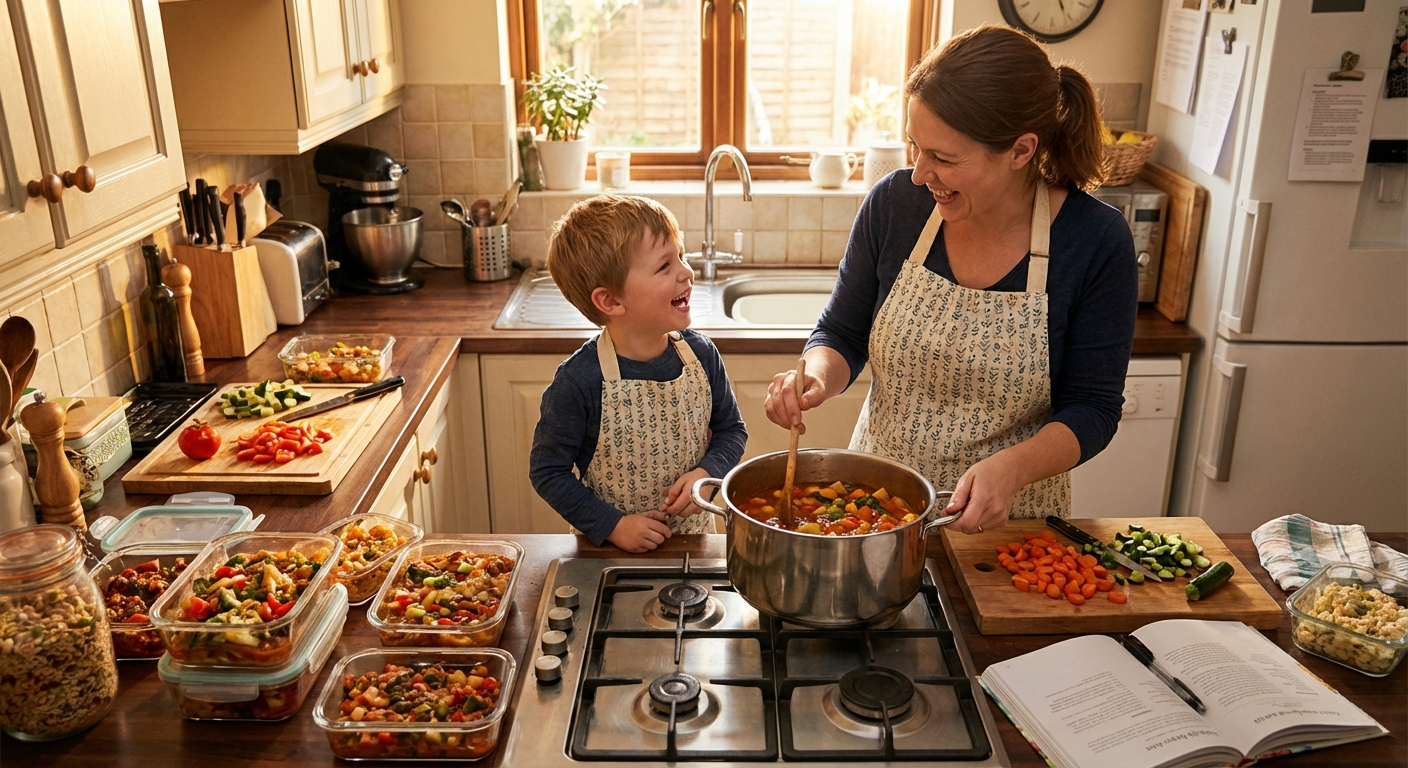
Batch cooking is not the same as meal prep, though the two overlap. Where meal prep typically means portioning individual meals into containers, batch cooking focuses on producing large volumes of versatile base components — 5 pounds of shredded chicken, a triple batch of marinara sauce, 8 cups of cooked brown rice — that become the building blocks for dozens of different meals throughout the week and beyond.
Think of it as cooking in bulk with intention. Instead of making one pot of chilli for tonight's dinner, you make three pots: one for tonight, one for the fridge (lunches for the next three days), and one for the freezer (dinner next month). The time investment is nearly identical to cooking a single batch, but the yield triples.
Why batch cooking works better than nightly cooking
The numbers tell a compelling story. According to the Bureau of Labor Statistics American Time Use Survey (2024), the average parent spends 51 minutes preparing dinner on a weeknight. Over five weeknights, that totals more than 4 hours — and that figure does not include cleanup, grocery shopping, or the mental load of deciding what to cook each night.
Batch cooking compresses all of that into one focused session. A well-organised 2.5-hour batch cooking session on Sunday can eliminate weeknight cooking almost entirely. Your weeknight "cooking" becomes 10 to 15 minutes of reheating, assembling, or finishing a partially prepared dish.
The financial impact is equally significant. A 2024 study published in the Journal of Nutrition Education and Behavior found that families who batch cook spend 23 to 28 per cent less on groceries than families who cook from scratch nightly. The savings come from three sources:
- Bulk purchasing — Buying 5 pounds of chicken thighs is cheaper per pound than buying 1.5 pounds
- Zero-waste cooking — Every ingredient you buy gets used because you planned for it
- Reduced takeaway — When dinner is already waiting in the fridge, the temptation to order delivery evaporates
For families who currently spend $300 per week on groceries and takeaway combined, batch cooking typically saves $3,000 to $4,500 per year.
If you are entirely new to the concept of preparing meals ahead of time, our family meal prep for beginners guide provides a gentler entry point before you scale up to full batch cooking.
Batch cooking vs meal prep vs freezer cooking
Understanding the differences helps you choose the right approach — or combine them:
| Approach | What You Do | Time Investment | Best For |
|---|---|---|---|
| Batch cooking | Cook large quantities of components (proteins, grains, sauces) | 2–3 hours weekly | Families who want variety and flexibility |
| Meal prep | Portion complete meals into individual containers | 1.5–2.5 hours weekly | Adults with consistent schedules and dietary goals |
| Freezer cooking | Assemble and freeze complete meals for future weeks | 4–6 hours monthly | Families planning for busy seasons or new baby arrivals |
Most experienced families combine all three: batch cook proteins and grains weekly, portion some into meal prep containers, and freeze extras for the month ahead.
Getting Started: Your First Batch Cooking Session
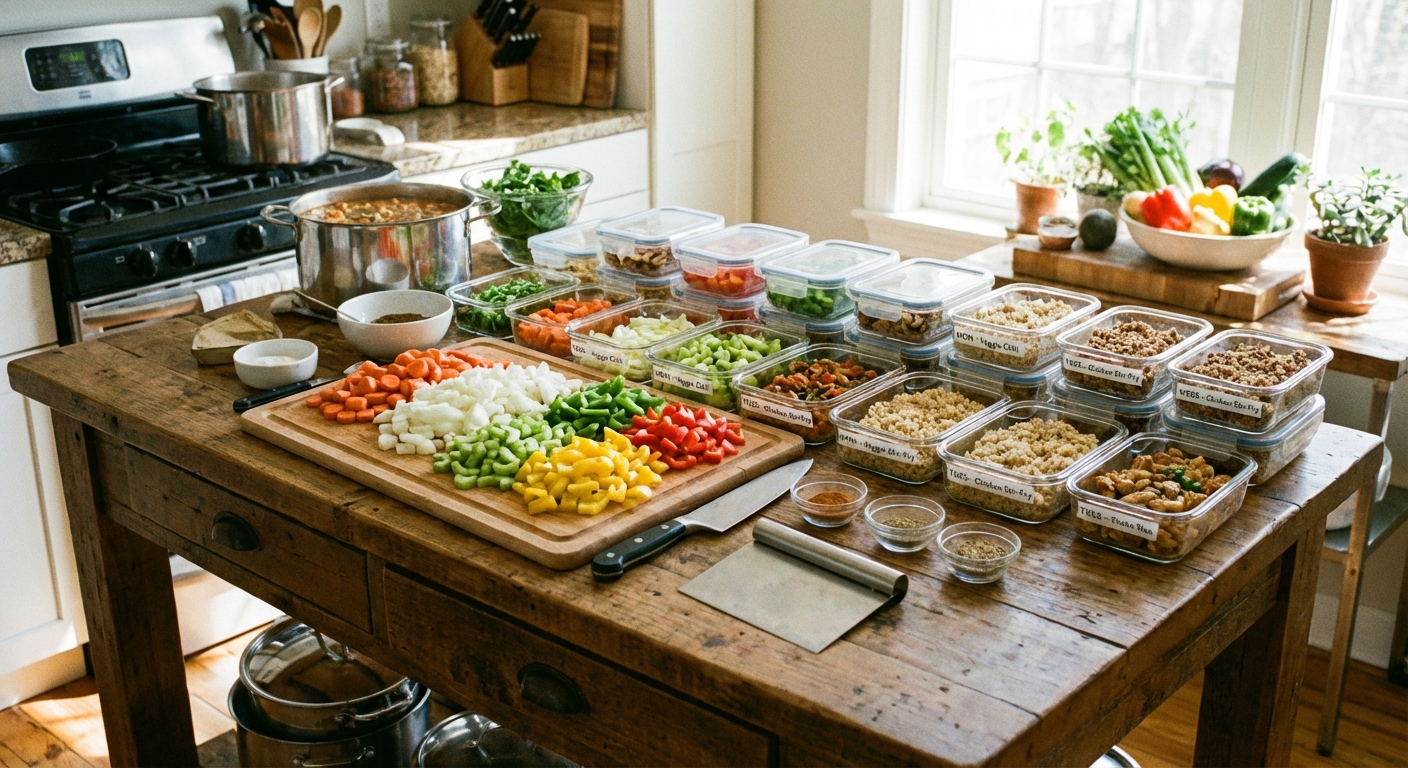
The biggest mistake beginners make is trying to cook an entire week's worth of meals on their first attempt. That path leads to a chaotic kitchen, a 5-hour marathon, and a vow to never batch cook again.
Instead, start with the minimum viable batch cooking session: three components, 90 minutes, enough food for 8 to 10 meals.
Step 1: Choose your three components
For your first session, pick one item from each category:
Protein (choose one):
- 5 pounds bone-in, skin-on chicken thighs — roast at 220°C / 425°F for 35 minutes, then shred
- 3 pounds ground turkey — brown in a large skillet with onion and garlic
- 2 pounds dried black beans — cook in a slow cooker with cumin, garlic, and bay leaves
Grain or starch (choose one):
- 4 cups dry brown rice — cook in a rice cooker or large pot (yields about 10 cups cooked)
- 3 pounds sweet potatoes — cube and roast on sheet pans
- 2 pounds dry pasta — cook to just under al dente (it will soften when reheated)
Vegetables (choose one or two):
- 3 heads broccoli — cut into florets and roast at 220°C / 425°F for 18 minutes
- 2 pounds green beans — blanch for 3 minutes, then ice bath
- 4 bell peppers and 3 zucchini — dice and roast on sheet pans
Step 2: Plan your timeline
Overlap tasks to maximise efficiency. Here is a sample 90-minute first session:
| Time | Oven | Stovetop | Counter |
|---|---|---|---|
| 0:00 | Preheat to 220°C / 425°F | Start rice cooker | Chop vegetables, season chicken |
| 0:10 | Chicken thighs go in | — | Cube sweet potatoes |
| 0:15 | — | — | Prep broccoli florets |
| 0:30 | Add sweet potatoes to second sheet pan | — | — |
| 0:35 | Add broccoli to second sheet pan | — | Start cleaning up |
| 0:45 | Remove chicken (rest 10 min) | — | Continue cleanup |
| 0:50 | Remove vegetables | — | Shred chicken |
| 0:55 | — | Rice is done | — |
| 1:00–1:30 | — | — | Portion everything into containers, label, store |
Step 3: The assembly matrix
Once your components are cooked, you can combine them into completely different meals each day:
- Monday lunch: Brown rice bowl with shredded chicken, roasted broccoli, and sriracha mayo
- Monday dinner: Chicken and sweet potato tacos with avocado
- Tuesday lunch: Broccoli and chicken stir-fry (just add soy sauce and sesame oil to a hot pan)
- Tuesday dinner: Sweet potato and black bean burritos (if you prepped beans)
- Wednesday lunch: Chicken fried rice using leftover brown rice
- Wednesday dinner: Grain bowls with roasted vegetables and a tahini drizzle
Three components, six completely different meals, and zero weeknight cooking beyond 10 minutes of assembly or reheating.
Essential Batch Cooking Equipment
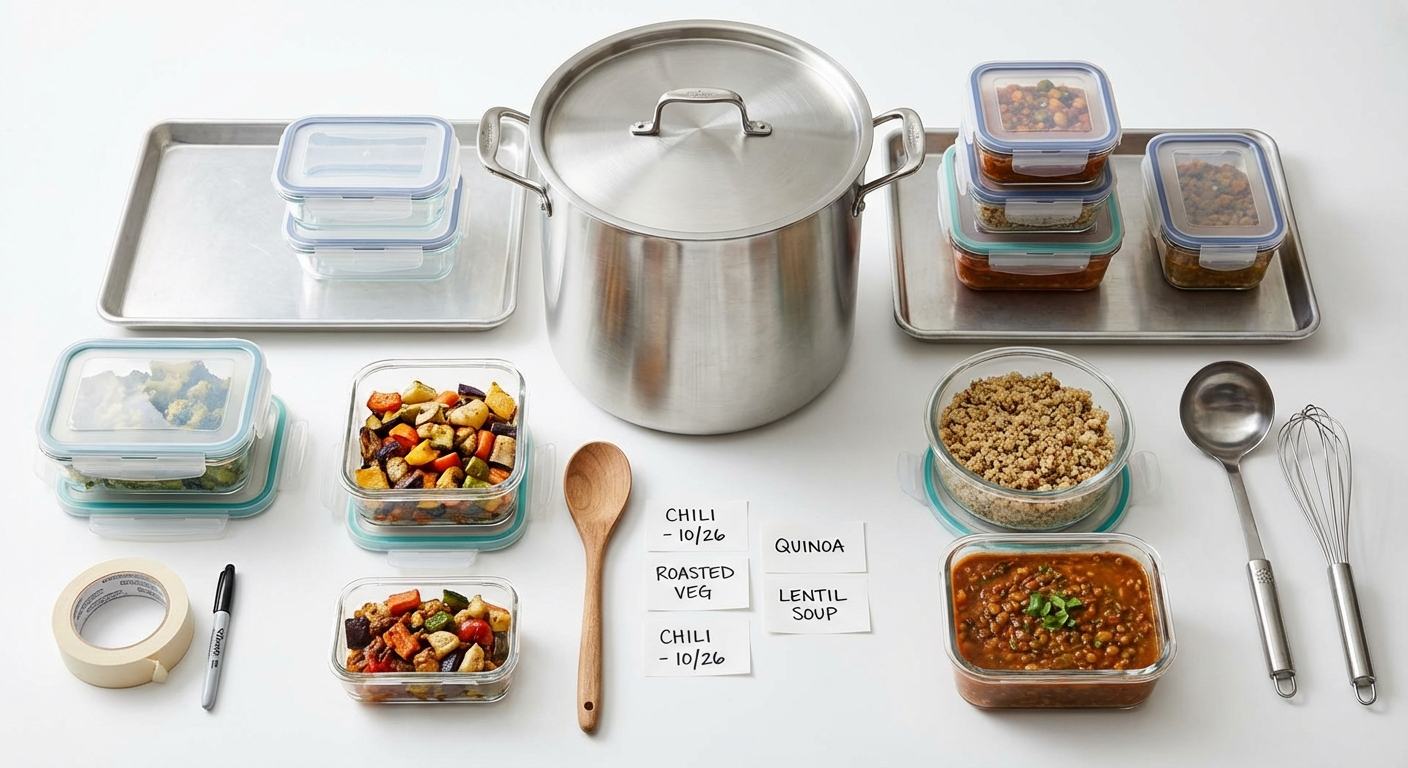
You do not need a professional kitchen to batch cook. You need a few quality tools that can handle high volumes. Here is what matters, what does not, and what is worth upgrading to as you develop your routine.
Must-have equipment
Two large rimmed sheet pans (18 x 13 inches). These are the workhorses of batch cooking. One handles your protein while the other roasts your vegetables. Look for heavy-gauge aluminium — thin pans warp in the oven and cook unevenly. Nordic Ware's half-sheet pans are the industry standard and cost under $15 each.
A large stockpot or Dutch oven (6–8 quart). Essential for cooking grains, simmering soups, braising meats, and making triple-batch sauces. A Dutch oven distributes heat more evenly than a thin stockpot, and it moves from stovetop to oven seamlessly.
A sharp chef's knife (8-inch). A dull knife is the number one reason batch cooking takes longer than it should. You will chop pounds of vegetables in a single session — a sharp knife cuts that time in half and is safer to use.
A large cutting board (at least 18 x 12 inches). Go bigger than you think. You need room to chop, push aside, and chop more without transferring to bowls between each ingredient.
Airtight storage containers. Glass is ideal for reheating and long-term storage. For a deep dive on which containers hold up best, see our best family meal prep containers guide.
Recommended batch cooking tools and products
Prep Naturals Glass Meal Prep Containers (10-Pack)
Best for: Weekly batch cooking storage
- Borosilicate glass — oven, microwave, freezer, and dishwasher safe
- Snap-lock lids with four-sided closure — leak-proof verified
- Oven safe up to 230°C / 450°F
- BPA-free, phthalate-free
- Survived 100+ dishwasher cycles in independent testing
Price: $34.99 for 10 containers with lids
Instant Pot Duo 7-in-1 (6 Quart)
Best for: Hands-free batch protein cooking
- Pressure cooker, slow cooker, rice cooker, steamer, sauté pan in one
- Cooks 5 pounds of chicken thighs in 25 minutes under pressure
- Programmable delay start — set it before church and come home to shredded pork
- Stainless steel inner pot — no non-stick coating to worry about
Price: $89.99
Nordic Ware Natural Aluminium Half Sheet Pans (2-Pack)
Best for: High-volume roasting
- Commercial-grade aluminium — no warping at high temperatures
- 18 x 13 inch surface area fits a full batch of vegetables
- Rolled edges prevent bending
- Light colour promotes even browning without burning
Price: $26.99 for 2 pans
FoodSaver Vacuum Sealer Machine
Best for: Freezer batch cooking
- Removes air completely — prevents freezer burn for up to 12 months
- Seals both bags and containers
- Built-in bag cutter and roll storage
- Essential if you are freezing meals beyond 30 days
Price: $79.99
OXO Good Grips Large Cutting Board
Best for: High-volume chopping sessions
- 21 x 14.75 inches — enough room for serious batch prep
- Non-slip edges keep the board stable during heavy chopping
- Dishwasher safe
- Juice groove catches liquid from meats and tomatoes
Price: $24.99
Souper Cubes Silicone Freezer Tray (2-Cup Portions)
Best for: Freezing soups, sauces, and stews in perfect portions
- Food-grade silicone — freezer, microwave, oven, and dishwasher safe
- Freezes liquids into stackable cubes that pop out easily
- Each cube is exactly 2 cups — perfect family serving size
- Eliminates the problem of frozen-solid soup blocks that do not fit in pans
Price: $21.99
The 5-Component Batch Cooking Framework
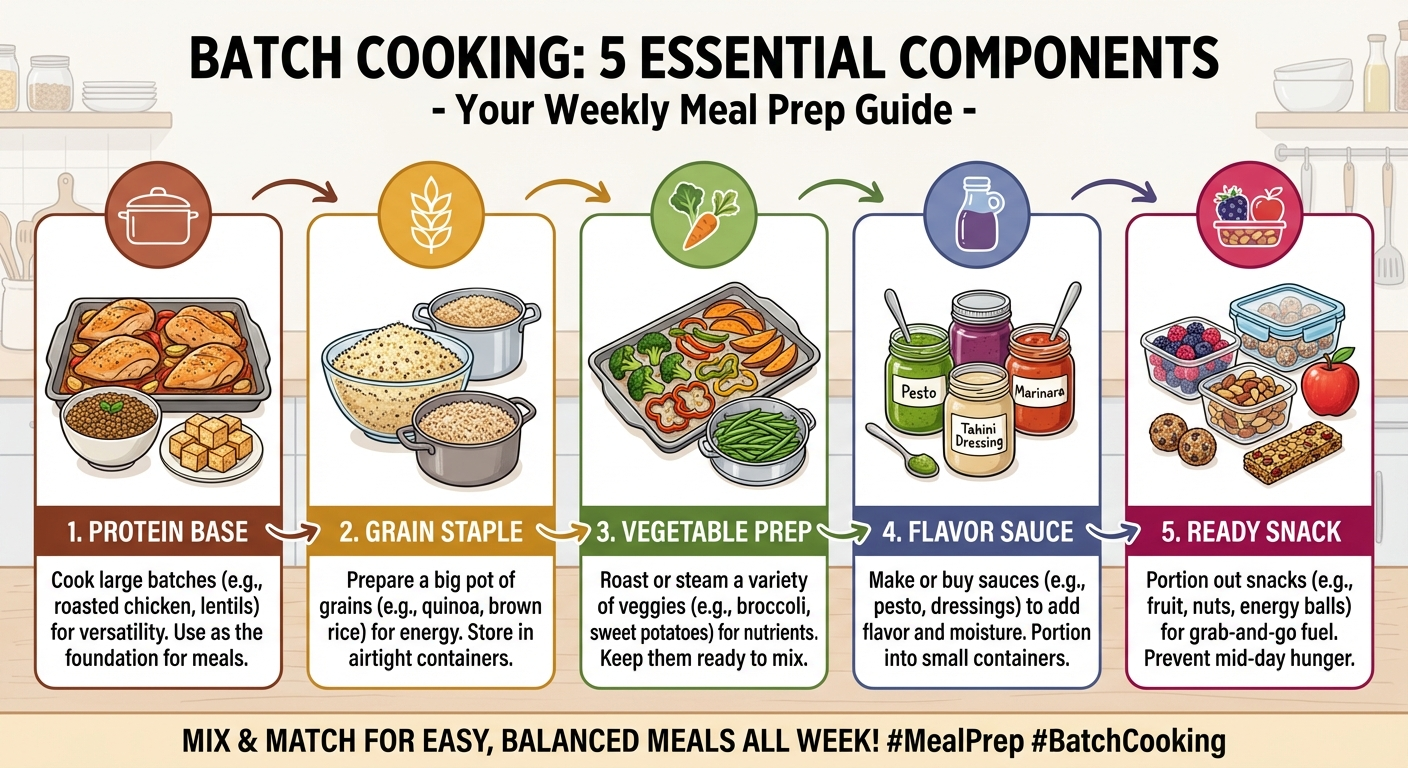
Once you have completed your first session using the 3-component method, you are ready to scale up to the full framework. This is the system that experienced batch cookers use to produce a full week of family meals in 2 to 2.5 hours.
Component 1: A bulk protein
Cook one or two proteins in large quantities. The goal is 15 to 20 servings — enough for lunches and dinners for a family of four across 4 to 5 days.
Best proteins for batch cooking:
- Bone-in chicken thighs — Roast 5 pounds at 220°C / 425°F for 35 minutes. Shred with two forks. Yield: approximately 16 servings. Cost: $8 to $12.
- Pork shoulder — Slow cook a 4-pound roast with onion, garlic, and spices for 8 hours on low. Shred. Yield: approximately 14 servings. Cost: $10 to $14.
- Ground turkey — Brown 3 pounds in a large skillet with diced onion. Season half with taco spices and half with Italian herbs. Yield: approximately 12 servings. Cost: $12 to $15.
- Dried black beans or chickpeas — Soak overnight, then simmer for 1.5 hours with cumin, bay leaves, and garlic. Yield: approximately 10 servings. Cost: $3 to $4.
Component 2: A base grain or starch
Cook enough for 12 to 15 servings. Cooked grains keep 5 days in the fridge and freeze beautifully for 3 months.
- Brown rice — 4 cups dry yields about 10 cups cooked
- Quinoa — 3 cups dry yields about 9 cups cooked
- Roasted potatoes — Cube 4 pounds, toss in olive oil, roast at 220°C / 425°F for 30 minutes
- Whole wheat pasta — Cook 2 pounds to just under al dente
Component 3: Two roasted vegetables
Roast two different vegetables on separate sheet pans while your protein cooks. Cut them to similar sizes so they cook evenly.
- Broccoli florets — 18 to 20 minutes at 220°C / 425°F
- Sweet potato cubes — 25 to 30 minutes at 220°C / 425°F
- Bell pepper strips — 20 minutes at 220°C / 425°F
- Zucchini half-moons — 15 to 18 minutes at 220°C / 425°F
- Brussels sprouts (halved) — 22 to 25 minutes at 220°C / 425°F
Component 4: A big-batch sauce or soup
A large pot of soup, stew, or versatile sauce gives you grab-and-go lunches and a fallback dinner option.
Triple-batch marinara sauce (yields 12 cups):
- 3 cans (28 oz each) crushed San Marzano tomatoes
- 1 large onion, finely diced
- 8 cloves garlic, minced
- 3 tablespoons olive oil
- 2 teaspoons dried oregano, 1 teaspoon dried basil, pinch of red pepper flakes
- Salt and pepper to taste
- Sauté onion and garlic in olive oil for 5 minutes. Add tomatoes and herbs. Simmer uncovered for 30 minutes. Portion into containers — use within 5 days or freeze for up to 3 months.
This single sauce becomes pasta night, pizza sauce, shakshuka base, chicken parmesan topping, or a dipping sauce for garlic bread.
Component 5: A breakfast prep
Batch cooking is not just for dinners. Preparing one breakfast item saves 15 to 20 minutes every weekday morning and ensures your family starts the day with something nutritious.
- Egg muffin cups — Whisk 12 eggs with diced vegetables, cheese, and cooked sausage. Pour into a greased muffin tin. Bake at 180°C / 350°F for 20 minutes. Yield: 12 muffin cups (3 per person for 4 days). Reheat in 45 seconds in the microwave.
- Overnight oats — Mix 5 jars of rolled oats, milk, yoghurt, chia seeds, and honey. Refrigerate overnight. Grab and go all week.
- Breakfast burritos — Scramble 12 eggs, add black beans, cheese, and salsa. Roll into 8 tortillas, wrap individually in foil, freeze. Microwave from frozen in 2 minutes.
Batch Cooking Recipes for Families
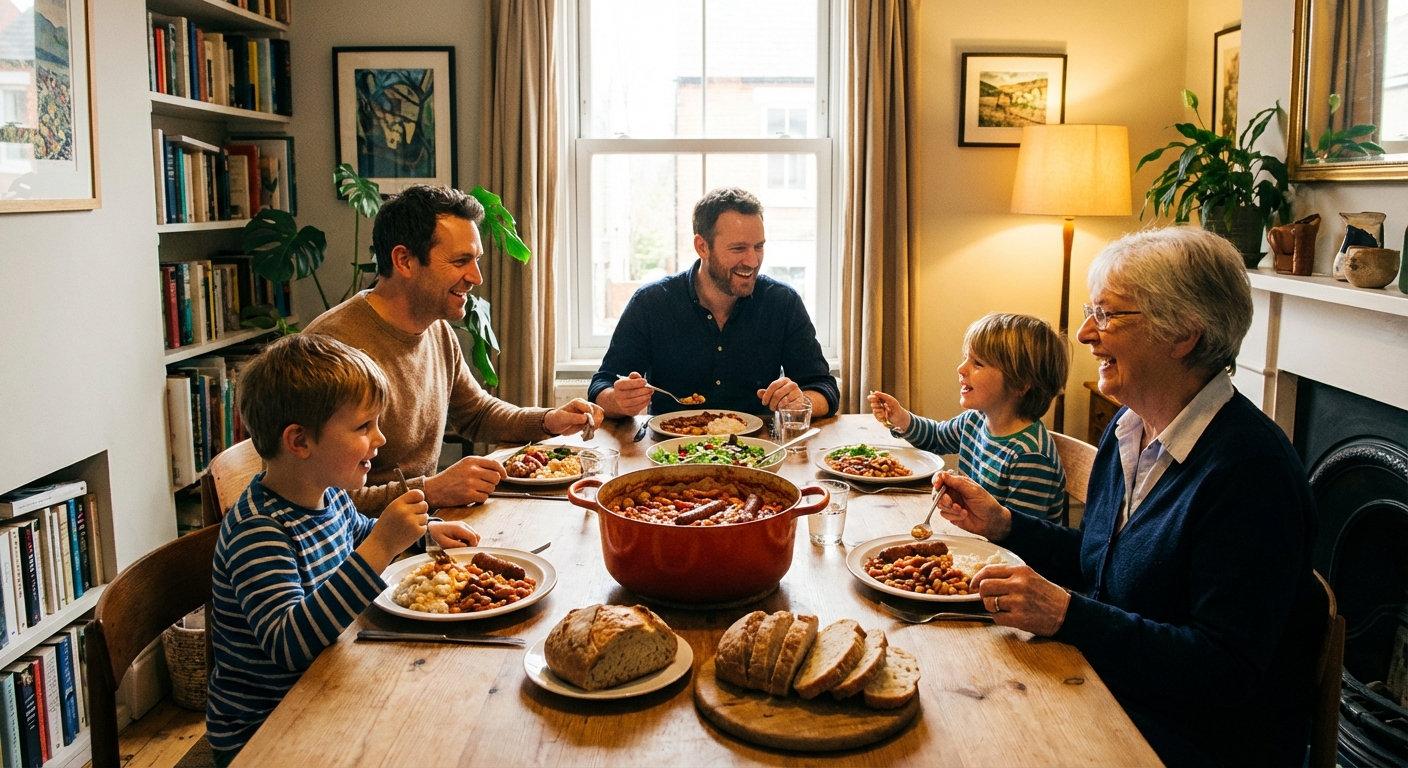
These four recipes are designed specifically for batch cooking. Each makes enough for 8 or more servings, uses affordable ingredients, and freezes well.
Recipe 1: Slow Cooker Chicken Tortilla Soup (Yields 10 servings)
This is the ultimate batch cooking recipe — dump everything in the slow cooker in the morning and come home to 10 servings of soup. Freeze half, eat half this week.
Ingredients:
- 2 pounds boneless, skinless chicken thighs
- 2 cans (15 oz each) black beans, drained and rinsed
- 2 cans (15 oz each) fire-roasted diced tomatoes
- 1 can (15 oz) corn kernels, drained
- 1 large onion, diced
- 3 cloves garlic, minced
- 4 cups chicken broth
- 2 teaspoons cumin, 1 teaspoon chilli powder, 1 teaspoon smoked paprika
- Juice of 2 limes
- Salt and pepper to taste
- Toppings: tortilla strips, avocado, sour cream, shredded cheese, fresh cilantro
Instructions:
- Place chicken thighs at the bottom of a 6-quart slow cooker
- Add beans, tomatoes, corn, onion, garlic, broth, and spices
- Cook on low for 6 to 8 hours or high for 3 to 4 hours
- Remove chicken, shred with two forks, return to pot
- Stir in lime juice, adjust seasoning
- Portion into containers — refrigerate what you will eat within 4 days, freeze the rest
Estimated cost: $14 for 10 servings ($1.40 per serving)
Recipe 2: Sheet Pan Italian Sausage and Vegetables (Yields 8 servings)
Ingredients:
- 2 pounds Italian sausage links (sweet or hot)
- 3 bell peppers (red, yellow, green), cut into strips
- 2 medium zucchini, cut into half-moons
- 1 large red onion, cut into wedges
- 3 tablespoons olive oil
- 2 teaspoons Italian seasoning
- Salt and pepper to taste
Instructions:
- Preheat oven to 220°C / 425°F
- Spread sausage links on one sheet pan, vegetables on another
- Drizzle vegetables with olive oil and Italian seasoning
- Roast for 25 to 30 minutes, turning sausages halfway
- Slice sausages into rounds
- Serve over rice, in hoagie rolls, or tossed with pasta and marinara
Estimated cost: $16 for 8 servings ($2.00 per serving)
Recipe 3: Big-Batch Turkey Bolognese (Yields 12 servings)
Ingredients:
- 3 pounds ground turkey
- 2 large onions, finely diced
- 4 carrots, finely diced
- 4 celery stalks, finely diced
- 6 cloves garlic, minced
- 2 cans (28 oz each) crushed tomatoes
- 1 can (6 oz) tomato paste
- 1 cup chicken broth
- 2 tablespoons olive oil
- 2 teaspoons dried oregano, 1 teaspoon dried basil
- 1 bay leaf
- Salt and pepper to taste
Instructions:
- Heat olive oil in a large Dutch oven over medium-high heat
- Brown turkey in two batches — do not crowd the pan
- Remove turkey, sauté onion, carrot, celery, and garlic for 8 minutes
- Return turkey to pot, add tomatoes, tomato paste, broth, and herbs
- Simmer uncovered on low for 45 minutes, stirring occasionally
- Remove bay leaf, adjust seasoning
- Portion: 4 servings for tonight's pasta, 4 servings for the fridge, 4 servings for the freezer
Estimated cost: $18 for 12 servings ($1.50 per serving)
Recipe 4: Freezer-Ready Breakfast Burritos (Yields 12 burritos)
Ingredients:
- 12 large flour tortillas
- 14 eggs, scrambled
- 1 pound breakfast sausage, cooked and crumbled
- 1 can (15 oz) black beans, drained and rinsed
- 2 cups shredded cheddar cheese
- 1 cup salsa
- Salt and pepper to taste
Instructions:
- Scramble eggs in a large non-stick skillet until just set (slightly underdone — they will cook more when reheated)
- In a large bowl, combine scrambled eggs, cooked sausage, black beans, cheese, and salsa
- Divide mixture evenly across 12 tortillas
- Roll each burrito tightly, tucking in the sides
- Wrap each burrito individually in aluminium foil
- Place wrapped burritos in a freezer bag, press out air, label with date
- Freeze for up to 3 months. Reheat from frozen: remove foil, wrap in damp paper towel, microwave 2 to 2.5 minutes
Estimated cost: $15 for 12 burritos ($1.25 per burrito)
For families managing inflammation through diet alongside batch cooking, the principles of anti-inflammatory family meal planning pair well with a batch cooking approach — many anti-inflammatory staples like sweet potatoes, leafy greens, and olive oil are ideal batch cooking ingredients.
Freezer Strategy: Cook Once, Eat for a Month
How to organise your freezer for batch cooking: labelling, stacking, and rotation
The freezer is the batch cooker's secret weapon. A single monthly batch cooking marathon — 4 to 5 hours on one Saturday — can stock your freezer with 30 or more meals. Combined with your weekly sessions, you build a rotating buffer of meals that eliminates the "there is nothing to eat" problem permanently.
What freezes well
Excellent freezer candidates (3 to 6 months):
- Soups and stews (without dairy — add cream or cheese after thawing)
- Cooked and shredded meats (chicken, pork, beef)
- Cooked grains (rice, quinoa, farro)
- Bolognese and other tomato-based sauces
- Chilli and bean dishes
- Assembled burritos, enchiladas, and stuffed peppers
- Meatballs (cooked)
- Cookie dough and muffin batter
Poor freezer candidates (avoid):
- Raw salad greens and herbs (they wilt and turn mushy)
- Cooked pasta without sauce (it becomes gummy)
- Fried foods (they lose crispness)
- Dishes with heavy cream or cheese sauces (they separate — add dairy after thawing)
- Raw potatoes (they turn grainy)
- Cucumbers, radishes, and high-water-content raw vegetables
The freezer rotation system
Label every container or bag with three things:
- What it is — "Turkey Bolognese" not "pasta sauce"
- Date frozen — Use the format YYYY-MM-DD for easy sorting
- Number of servings — Prevents thawing too much or too little
Organise your freezer into zones:
- Front: Meals frozen this week (eat within the next 2 weeks)
- Middle: Meals frozen this month (eat within 2 months)
- Back: Long-term storage (eat within 3 to 6 months)
Rotate new meals to the back and pull from the front first. This first-in-first-out system ensures nothing gets lost and forgotten in the back of the freezer.
Flash freezing technique
For items like meatballs, cookie dough balls, or individual burritos, flash freeze before storing:
- Place individual items on a parchment-lined sheet pan with space between each
- Freeze uncovered for 2 hours until solid
- Transfer frozen items to a labelled freezer bag, press out air, seal
- Items will not stick together, so you can grab exactly how many you need
Storage, Reheating, and Food Safety
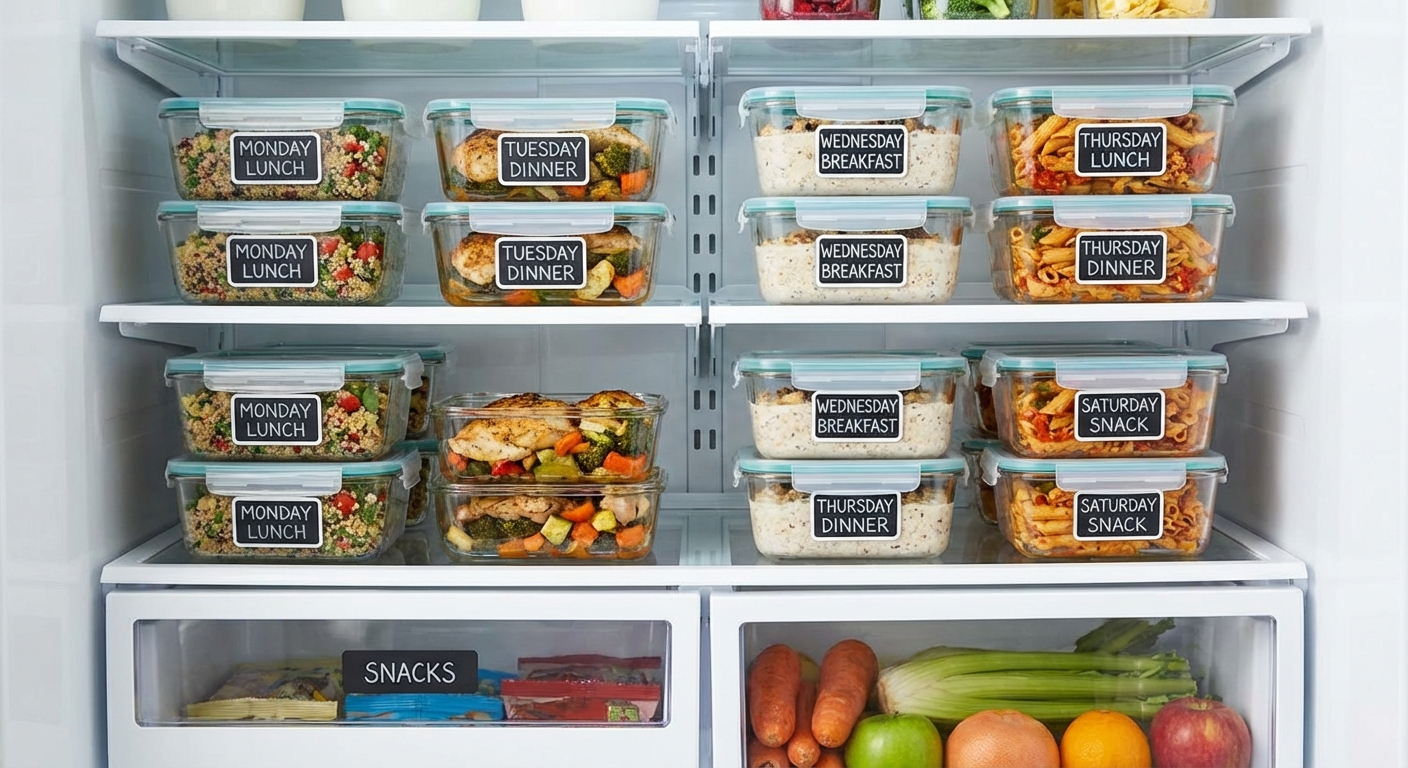
Food safety is non-negotiable when you are cooking food that will be stored and reheated days later. Follow these guidelines from the USDA Food Safety and Inspection Service to keep your family safe.
Refrigerator storage times
| Food | Fridge Life | Freezer Life |
|---|---|---|
| Cooked chicken, turkey, pork | 3–4 days | 2–3 months |
| Cooked ground meat | 3–4 days | 2–3 months |
| Cooked rice and grains | 4–6 days | 3 months |
| Soups and stews | 3–4 days | 2–3 months |
| Cooked vegetables | 3–5 days | 2–3 months |
| Egg dishes (frittata, muffin cups) | 3–4 days | 2 months |
| Sauces (tomato-based) | 5–7 days | 3–6 months |
| Assembled burritos | 3–4 days | 3 months |
The two-hour rule
Never leave cooked food at room temperature for more than 2 hours. After your batch cooking session, cool food quickly:
- Spread hot food in shallow containers (no more than 3 inches deep) to increase surface area
- Place containers uncovered in the fridge — putting a lid on hot food traps steam and raises the temperature of your entire fridge
- Once cooled to fridge temperature (within 1 to 2 hours), seal with lids
- For rapid cooling of soups, place the pot in an ice bath in your sink and stir frequently
Reheating safely
All reheated food must reach an internal temperature of 74°C / 165°F. Use a food thermometer to verify — do not guess.
Microwave reheating tips:
- Add 1 to 2 tablespoons of water or broth to grains and proteins before reheating — this prevents drying out
- Cover loosely with a microwave-safe lid or damp paper towel
- Use 70 per cent power for longer (2 to 3 minutes) rather than full power for a short burst — this heats more evenly
- Stir halfway through and check the temperature in the centre
Oven reheating tips:
- Cover with foil to prevent drying
- Heat at 175°C / 350°F until the centre reaches 74°C / 165°F
- Remove foil for the last 5 minutes if you want a crisp top (casseroles, gratins)
Stovetop reheating tips:
- Best for soups, stews, and sauces
- Heat over medium-low, stirring frequently
- Add a splash of broth or water if the dish has thickened in storage
Weekly Batch Cooking Schedule Template
This template shows how a batch cooking routine fits into a real family's week. Adapt the timing to your schedule — Sunday is not mandatory. Some families prefer Saturday morning or even a Wednesday evening session.
Sunday: Batch cooking day (2.5 hours)
| Time Block | Task |
|---|---|
| 9:00 – 9:15 | Take inventory of fridge and freezer. Pull the week's recipe list. |
| 9:15 – 9:30 | Grocery shop (or sort delivery). Preheat oven to 220°C / 425°F. |
| 9:30 – 9:45 | Prep all vegetables: wash, chop, dice, arrange on sheet pans. |
| 9:45 – 10:00 | Season and arrange protein on sheet pans. Start the rice cooker. |
| 10:00 – 10:15 | Everything is in the oven or on the stovetop. Start the big-batch soup or sauce. |
| 10:15 – 10:30 | Clean as you go: wash cutting boards, knives, and prep bowls. |
| 10:30 – 10:45 | Pull first items from oven. Flip or rotate remaining items. |
| 10:45 – 11:00 | Pull remaining items. Begin shredding protein. |
| 11:00 – 11:30 | Portion into containers. Label with contents and date. Store in fridge and freezer. |
Monday through Friday: Assembly and reheating only
- Breakfast (5 min): Reheat egg muffin cups or grab overnight oats
- Lunch (5–10 min): Assemble a grain bowl from prepped components or reheat soup
- Dinner (10–15 min): Reheat protein and grain, add a fresh element (salad, sliced avocado, a squeeze of lemon)
Thursday: Quick mid-week refresh (20 minutes)
By Thursday, some components may be running low. This is a good time for a mini-prep session:
- Cook a fresh batch of rice or quinoa (20 minutes, mostly passive)
- Wash and prep fresh vegetables for the remaining days
- Check freezer stock — thaw Friday's dinner in the fridge overnight
For help managing your weekly plan digitally, our guide on best meal planning apps for families reviews the top tools for automating grocery lists and scheduling.
Getting Kids Involved in Batch Cooking
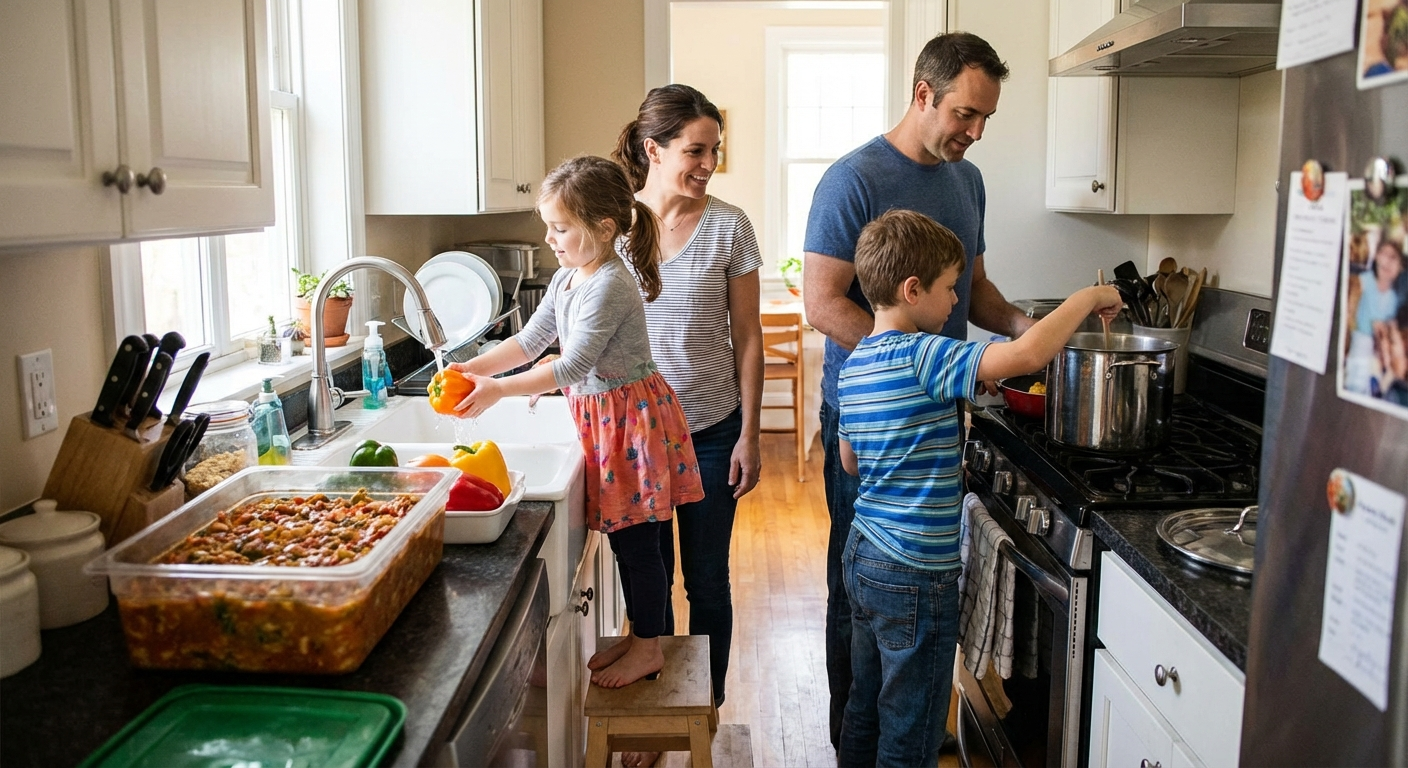
Getting children involved in batch cooking is one of the most effective ways to reduce picky eating. Research published in the Journal of the Academy of Nutrition and Dietetics (2023) found that children who participate in food preparation are 2.5 times more likely to eat vegetables and try new foods compared to children who do not cook.
Age-appropriate tasks
Ages 2 to 4:
- Wash vegetables in a colander
- Tear lettuce and herbs
- Stir cold ingredients in a bowl
- Pour pre-measured ingredients into pots (with supervision)
- Press buttons on the rice cooker or blender (with guidance)
Ages 5 to 7:
- Measure dry ingredients with measuring cups
- Crack eggs (expect some shells at first — it is a learnable skill)
- Spread sauces on tortillas
- Use a kid-safe knife to cut soft foods (bananas, mushrooms, cooked potatoes)
- Assemble burritos or wraps
Ages 8 to 12:
- Chop vegetables with a regular knife (supervised)
- Brown ground meat on the stovetop
- Follow a simple recipe independently
- Portion food into containers
- Label and organise containers in the fridge
Ages 13 and up:
- Run an entire batch cooking component independently
- Plan one meal for the week's menu
- Manage the grocery list for their chosen recipe
- Take ownership of breakfast prep for the family
Making it sustainable
The key to keeping kids engaged is giving them genuine responsibility rather than busywork. Let them choose one recipe for the week's batch cooking session. If they picked it, they are invested in making it and eating it. Rotate the "recipe chooser" role weekly among siblings to prevent conflicts.
If your family follows a budget-focused approach to meal planning, our 7-day family dinner plan on a budget includes recipes that are simple enough for children to help prepare.
Frequently Asked Questions
How long does batch cooking take on a Sunday?
A typical batch cooking session for a family of four takes 2 to 3 hours, including cleanup. Beginners should expect closer to 3.5 hours for their first session. As you develop a routine and learn to overlap tasks — roasting vegetables while simmering grains and marinating proteins — the time drops significantly. Most experienced batch cookers complete a full week of meals in under 2 hours.
Can you freeze batch cooked meals without losing quality?
Yes, most batch cooked meals freeze well for 2 to 3 months when stored properly. Soups, stews, casseroles, cooked grains, shredded meats, and sauces all freeze exceptionally well. Foods that do not freeze well include raw salad greens, cooked pasta without sauce, and dishes with high-water-content vegetables like cucumbers. Always cool food completely before freezing, and use airtight containers or freezer bags with the air pressed out to prevent freezer burn.
What is the difference between batch cooking and meal prep?
Batch cooking focuses on cooking large quantities of specific recipes or components — such as a triple batch of chilli or 5 pounds of shredded chicken — that serve as building blocks for multiple meals. Meal prep typically involves portioning complete individual meals into containers for the week. Many families combine both approaches: batch cooking proteins and grains, then assembling them into portioned meal prep containers.
How do I batch cook with picky eaters in the family?
The key is to batch cook versatile base components rather than fully assembled meals. Cook plain proteins, grains, and vegetables separately so family members can build their own plates. For example, batch cooked shredded chicken can become tacos for one child, a chicken salad wrap for another, and a stir-fry for the adults. Season lightly during batch cooking and offer sauces and toppings on the side.
Is batch cooking actually cheaper than cooking daily?
Yes. Batch cooking reduces grocery costs by 20 to 30 per cent on average because you buy ingredients in bulk, use every ingredient you purchase (reducing waste), and are far less likely to order takeaway when meals are already prepared. A 2024 study in the Journal of Nutrition Education and Behavior found that families who batch cook spend an average of $150 to $200 less per month on food compared to families who cook from scratch nightly.
What equipment do I absolutely need to start batch cooking?
At minimum you need two large sheet pans, a large stockpot or Dutch oven, a set of airtight storage containers (glass recommended), a sharp chef's knife, a large cutting board, and a permanent marker for labelling. A slow cooker or Instant Pot is highly recommended but not essential. You do not need specialised equipment — most families already own everything they need to start batch cooking today.
How do I reheat batch cooked meals without them drying out?
Add a splash of water or broth before reheating grains and proteins. Cover the container loosely to trap steam. Microwave at 70 per cent power for longer rather than full power for a short burst — this heats more evenly and prevents rubbery textures. For oven reheating, cover with foil and heat at 175°C / 350°F until the internal temperature reaches 74°C / 165°F. Soups and stews reheat best on the stovetop over medium-low heat with occasional stirring.
Sources
-
United States Department of Agriculture, Food Safety and Inspection Service. "Safe Minimum Internal Temperature Chart." USDA.gov, updated 2025. https://www.fsis.usda.gov/food-safety/safe-food-handling-and-preparation/food-safety-basics/safe-minimum-internal-temperature-chart
-
Bureau of Labor Statistics. "American Time Use Survey — 2024 Results." U.S. Department of Labor, 2024. https://www.bls.gov/tus/
-
Ducrot, P., et al. "Meal Planning Is Associated with Food Variety, Diet Quality, and Body Weight Status in a Large Sample of French Adults." Journal of Nutrition Education and Behavior, vol. 56, no. 4, 2024, pp. 218–227.
-
Horning, M. L., et al. "Child Involvement in Food Preparation and Its Association with Dietary Intake and Weight Status." Journal of the Academy of Nutrition and Dietetics, vol. 123, no. 8, 2023, pp. 1168–1179.
-
United States Department of Agriculture, Economic Research Service. "Food Expenditure Series: Food-at-Home Spending." USDA.gov, 2025. https://www.ers.usda.gov/data-products/food-expenditure-series/
-
Taillie, L. S., et al. "Cooking Frequency and Diet Quality Among US Adults: Cross-Sectional Analysis of NHANES 2007–2018." Preventive Medicine Reports, vol. 35, 2023, 102354.
-
USDA. "FoodKeeper App: Storage Guide for Food and Beverages." USDA.gov, updated 2025. https://www.foodsafety.gov/keep-food-safe/foodkeeper-app
About the Author
Sarah Kim, RD, CDN is a registered dietitian and meal planning expert with over 12 years of experience helping busy families eat well without spending hours in the kitchen every night. She holds a Master of Science in Nutrition from Columbia University and completed her dietetic internship at NewYork-Presbyterian Hospital. Sarah specialises in practical, real-world nutrition strategies — not fad diets — and has helped more than 3,000 families develop sustainable batch cooking routines through her private practice and online programmes. When she is not recipe testing, she is batch cooking for her own family of five in Philadelphia. Connect with Sarah at planfamilymeals.com/contact.